



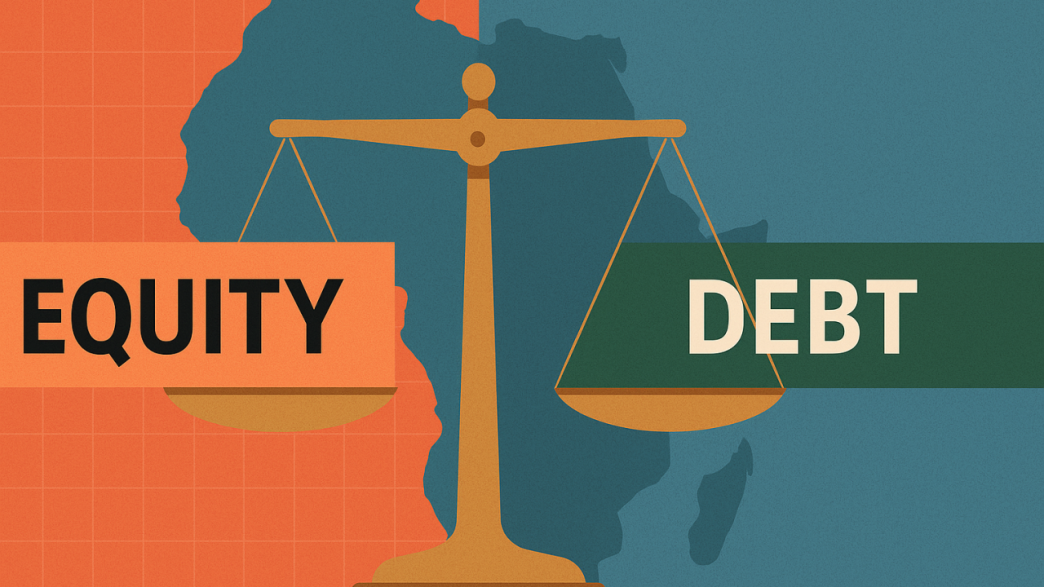
A profound structural shift is reshaping Africa’s $1.2 billion venture debt market as top-tier Nigerian scaleups aggressively favor Naira-denominated loans over traditional dollar equity. Amidst a prolonged contraction in global foreign venture capital—which saw Nigeria slide to fourth place on the continent’s equity funding charts—local tech companies are utilizing structured local debt to safeguard their valuations. By raising capital in the exact currency of their underlying operational revenues, founders are successfully eliminating the severe currency devaluation risks that decimated dollar-denominated returns over the past three years.
The Context
Historically, Nigerian tech infrastructure was built entirely on hard-currency equity rounds led by Silicon Valley and European funds. However, the aggressive floatation and subsequent 70% depreciation of the Naira made servicing dollar liabilities or promising dollar exits an unsustainable burden for businesses earning in NGN. Concurrently, data from Africa: The Big Deal indicates that venture debt’s share of total continental funding has surged past 38%, turning credit into a primary capitalization tool rather than a secondary alternative.
Main Details
The growth is highly concentrated within high-yield, asset-heavy, or predictable revenue sectors such as energy, mobility, and fintech. Local private credit structures—ranging from $1 million to $5 million facilities—are increasingly structured around receivable tokenization and equipment securitization rather than rigid corporate collateral. Local funds and regional investment banks are aggressively building out these local-currency debt portfolios to absorb market demand from mature scaleups requiring robust working capital for inventory and on-lending. 
Why It Matters
This evolution completely alters the unit economics of African tech. By replacing high-dilution equity with local currency debt, Nigerian startups are forced to prioritize immediate path-to-profitability and reliable cash-flow over speculative customer acquisition models. Furthermore, it shifts the gravitational pull of ecosystem funding away from international venture capital boards and places it firmly within the hands of domestic institutional lenders and local asset managers.
Conclusive Thoughts
The rise of Naira-denominated venture debt marks the end of cheap foreign equity dependency for Nigerian tech. As scaleups increasingly balance their capital stacks with local credit, the companies that survive will be those whose daily operational revenues are strong enough to back their structural balance sheets.
Explore more stories on startups, funding, and innovation across Africa in our Startups & Funding section.