



African startup funding is on track to cross the $1 billion mark in the first half of 2026, even as the number of deals has plummeted by over 50%. This “2026 Paradox” signals a pivot toward capital efficiency over raw growth, with investors concentrating heavy checks into a select group of “Centaur” startups boasting sustainable unit economics.
The Context
For years, the African tech ecosystem was defined by “growth-at-all-costs,” fueled by cheap global capital and high-volume seed rounds. However, as of May 2026, the landscape has shifted. According to Q1-Q2 data, while 2025 saw 173 deals in the same period, 2026 has recorded only 84. Despite this, total capital raised has actually increased, hitting $887 million by early May.
The Surge in Tickets
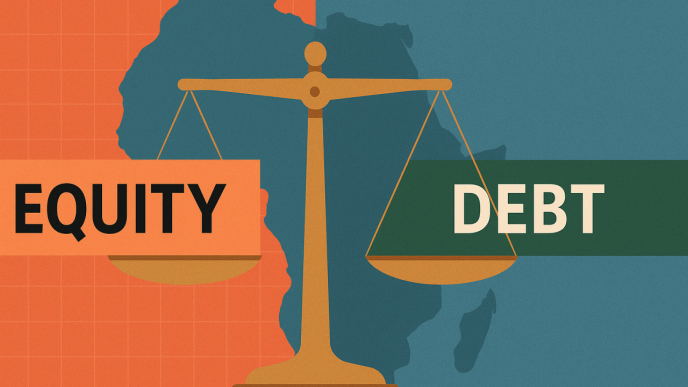
The “Great Filtering” is most visible in Series B and C rounds. Investors are no longer betting on every vibrant idea; they are doubling down on market leaders in Fintech and Energy. Mature startups are now securing ticket sizes in the $10M–$50M range, often utilizing a mix of equity and aggressive debt financing to fuel expansion without diluting ownership. 
Why It Matters
This shift marks the emergence of the “Centaur” startup—lean, AI-integrated companies hitting $100 million in annual revenue with fewer than 100 employees. By prioritizing unit economics, these startups are proving that Africa’s digital economy can deliver high-margin returns, stabilizing the system against global macroeconomic headwinds.
Conclusive Thoughts
As 2026 progresses, the focus is firmly on “scalers” rather than “survivors.” While the early-stage pipeline remains under pressure, the concentration of capital into high-performing, mature entities suggests a healthier, more resilient era for African tech—one where quality is the only currency that counts.
Explore more stories on startups, funding, and innovation across Africa in our Startups & Funding section.