



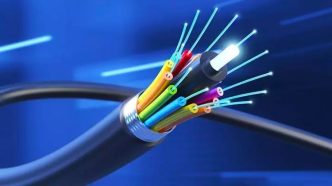

Nigeria continues to push an ambitious plan to expand its national fiber backbone to 90,000 kilometres, as the Ministry of Communications doubles down on digital infrastructure expansion. The goal aims to strengthen broadband access, boost economic growth, and support the country’s fast-growing digital economy.
However, a major gap still exists between policy ambition and real-world execution. While the federal government sets the target, state-level cooperation will ultimately decide whether Nigeria succeeds or stalls.
A National Goal Meets a Local Reality Check
At first glance, the 90,000km fiber expansion appears achievable. Nigeria already has rising demand for faster internet, stronger connectivity, and wider digital inclusion. 
However, field-level data reveals a sharper reality. State policies on Right-of-Way (RoW) fees now determine the speed of fiber deployment more than federal targets do.
In addition, telecom operators report uneven approval processes across states, which directly affects how quickly they can lay fiber infrastructure.
As a result, Nigeria now faces a split system: some states accelerate digital growth, while others slow it down.
Right-of-Way Fees: The Biggest Bottleneck
Right-of-Way (RoW) fees remain the most critical obstacle in Nigeria’s fiber expansion.
Telecom companies must pay state governments before they install fiber cables along public roads. However, states do not follow a unified system.
Some states actively support digital expansion. They reduce or waive RoW fees, and they simplify approval processes. Consequently, telecom operators deploy fiber faster and at lower cost.
On the other hand, several states impose high fees and complex procedures. As a result, companies delay projects or reduce investment in those regions.
Therefore, RoW policy now shapes Nigeria’s digital map more than infrastructure demand does.
Where Fiber Expansion Moves Faster
In states that support digital infrastructure, fiber rollout progresses quickly.
First, these states reduce RoW costs, which attracts more telecom investment. In addition, they streamline approvals, which shortens deployment timelines.
As a result, internet access improves faster in these regions, especially in major urban areas.
Moreover, these states position themselves as emerging digital hubs, which attracts startups, fintech companies, and data-driven businesses.
Where Progress Slows Down
In contrast, states with high RoW fees slow down national fiber expansion.
Telecom operators often avoid expensive regions or delay large-scale deployment. Furthermore, they prioritize cities with better returns, which leaves rural areas behind.
In addition, high infrastructure costs often increase consumer internet prices. Consequently, many Nigerians still struggle with limited access or poor quality connectivity.
Therefore, uneven policy decisions deepen the country’s digital divide.
Boots-on-the-Ground Audit: What the Data Shows
Field observations across Nigeria reveal a consistent pattern.
- States that reduce RoW fees attract faster fiber investment
- States with high fees experience slower infrastructure rollout
- Urban corridors receive most fiber coverage, while rural areas lag
In addition, telecom operators consistently prioritize regions with lower regulatory friction.
Therefore, Nigeria’s fiber expansion depends less on technical capacity and more on policy alignment across states.
What Nigeria Must Do to Hit the 90,000km Target
Nigeria can still achieve its fiber expansion goal, but only if key reforms happen quickly.
First, the country must standardize RoW fees nationwide. This step will remove uncertainty and encourage faster private-sector investment.
Second, governments must treat fiber as critical infrastructure, not a revenue source. This shift will support long-term economic growth instead of short-term earnings.
Finally, federal and state authorities must strengthen coordination. Clear enforcement and collaboration will ensure that national targets translate into real infrastructure on the ground.
Conclusion: A Test of Cooperation, Not Technology
Nigeria already has the demand, the technology, and the private-sector interest to build a strong fiber backbone. However, success depends on one key factor: cooperation between federal and state governments.
In summary, the 90,000km fiber goal will not fail because of technical limitations. Instead, it will succeed or fail based on policy consistency, regulatory alignment, and how quickly states stop treating fiber infrastructure as a tax asset.
Ultimately, Nigeria’s digital future depends on whether it can turn ambition into coordinated action across all levels of government.