


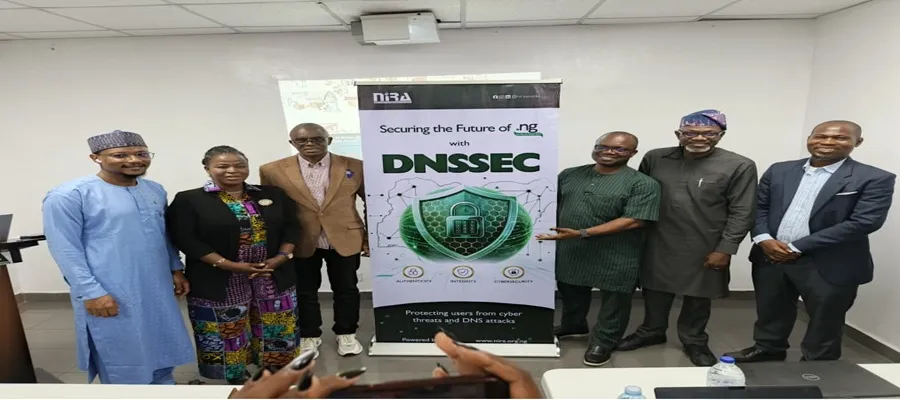
In a decisive move to secure Nigeria’s sovereign digital borders, the Nigeria Internet Registration Association (NiRA) has officially activated Domain Name System Security Extensions (DNSSEC) on the .ng country-code Top-Level Domain (ccTLD). This deployment introduces a layer of cryptographic verification that prevents “DNS spoofing”—a common cyberattack where traffic is redirected to fraudulent websites. By providing a “digital signature” for every query, NiRA is transforming the .ng domain from a local identity symbol into one of the most secure online environments in Africa, offering Nigerian businesses a compelling technical reason to migrate from foreign .com extensions to a locally-protected infrastructure.
Trust vs. The “Man-in-the-Middle”
The global Domain Name System (DNS) was originally designed for efficiency, not security, operating on a “blind trust” model. For years, this has left Nigerian organizations vulnerable to Cache Poisoning and Man-in-the-Middle (MITM) attacks. In these scenarios, hackers intercept a user’s request for a legitimate site—like a bank or a government portal—and redirect them to a malicious clone without the user ever knowing. The activation of DNSSEC on the .ng domain marks the end of this vulnerability, replacing blind trust with a rigorous “chain of trust.”
Cryptographic Protection for the .ng Space
DNSSEC works by digitally signing DNS records using public-key cryptography. When a user types a .ng address, the browser now checks the cryptographic signature against the “keys” held by NiRA. If the signature doesn’t match, the browser identifies the response as tampered and refuses to connect, effectively neutralizing spoofing attempts. 
Why It Matters: Digital Sovereignty and Security
This milestone is critical for three key reasons:
- Anti-Spoofing: It provides absolute certainty that when a customer visits a business website, they are actually on the legitimate server.
- SEO and Global Trust: Modern search engines and browsers increasingly prioritize “signed” zones, potentially giving .ng sites a slight edge in global trust rankings.
- National Security: By securing the .ng root, NiRA is protecting government communications (gov.ng) and military assets from sophisticated state-sponsored redirection attacks.
A New Standard for Nigerian Tech
The “.ng Fortress” is now live. The deployment of DNSSEC is more than a technical patch; it is a foundational upgrade that makes the Nigerian internet a harder target for criminals. The era of .ng as a “secondary option” is over. In 2026, the .ng domain is now a safe bet for any business serious about protecting its customers and its brand.
Explore more stories on startups, funding, and innovation across Africa in our Startups & Funding section.