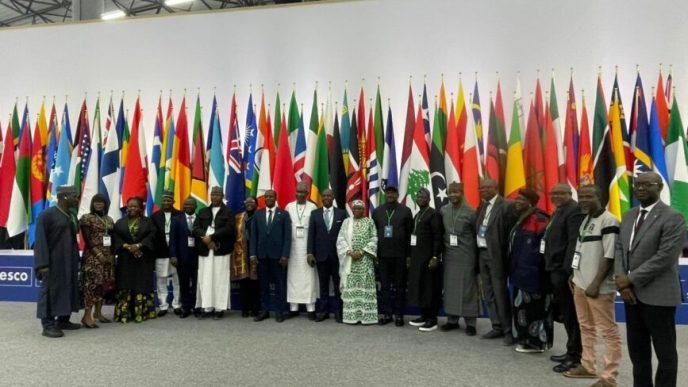





The Nigerian Communications Commission (NCC) has officially inaugurated the Nigerian IPv6 Council, launching an ambitious three-year roadmap to transition the nation from the exhausted IPv4 protocol to Internet Protocol version 6 (IPv6). With Nigeria’s data consumption surging by 38.4% this year, the legacy 1980s addressing system has run out of unique identifiers, threatening to stall the nation’s digital expansion. Despite the mandate, only 5% of Nigeria is currently IPv6-compliant, creating a critical bottleneck for 5G deployment and the burgeoning AI economy.
The Exhaustion of IPv4
For decades, Nigeria has relied on IPv4, which offers only 4.3 billion addresses globally—a pool that is now officially bone-dry. As more Nigerians connect via multiple devices, the “address scarcity” has forced ISPs to use complex workarounds like Carrier-Grade NAT, which degrades internet speed and security. The newly formed Council is tasked with ensuring Nigeria doesn’t become a “digital island” as the global web moves to the virtually infinite 128-bit space of IPv6.
The “Dual-Stack” Hurdle
The primary obstacle to this overhaul is the “Dual-Stack” hurdle, where IT teams must run both protocols simultaneously during the transition. Many local network administrators remain reluctant due to the perceived high cost of hardware upgrades and the complexity of reconfiguring legacy servers. 
Why It Matters
The stakes for Nigeria’s digital sovereignty are immense:
- 5G Scalability: 5G requires massive device density; without IPv6, the “Internet of Things” (IoT) will remain a theoretical concept in Lagos.
- AI Latency: AI model training and real-time processing require end-to-end transparency that IPv4 workarounds destroy.
- Security: IPv6 includes native encryption (IPsec), providing a much-needed layer of defense against the rising tide of African cyber-attacks.
Ending the 1980s Legacy
The inauguration of the IPv6 Council marks the beginning of the end for Nigeria’s reliance on an obsolete internet backbone. As the three-year clock starts, the message to local IT teams is clear: the transition will be difficult, but staying in the 1980s is no longer an option.
Explore more stories on startups, funding, and innovation across Africa in our Startups & Funding section.