


Nigeria’s telecom sector has reached a new milestone. The Nigerian Communications Commission (NCC) announced that 5G penetration has climbed to 14%.
However, regulators argue that this is still an early stage. According to the Nigerian Communications Commission, true digital transformation only begins when the country reaches about 30% coverage.
As a result, the conversation is shifting from speed to scale. 
14% Coverage: “Islands of Speed”
At 14%, 5G networks remain concentrated in major cities. Areas like Lagos and parts of Abuja enjoy ultra-fast connectivity.
However, these pockets of speed do not reflect national access. Instead, they create what experts call “islands of speed.”
In other words, only select users benefit from advanced connectivity, while the majority still rely on 4G or weaker networks.
Therefore, national impact remains limited.
Why 30% Is the Real Turning Point
The NCC believes 30% penetration is the critical threshold for meaningful transformation.
At that level, networks become dense enough to support large-scale digital systems. This includes smart infrastructure, real-time data exchange, and industrial automation.
In addition, coverage expands beyond elite urban zones. More businesses and communities gain access to reliable 5G.
Consequently, the network effect begins to take hold.
The “Network Effect” Explained Simply
A network effect happens when a system becomes more valuable as more people use it.
In telecom terms, more users mean stronger demand, better infrastructure investment, and improved service quality.
Therefore, once 5G reaches 30%, its usefulness increases exponentially.
However, below that point, benefits remain fragmented.
Why Smart Cities Depend on Scale
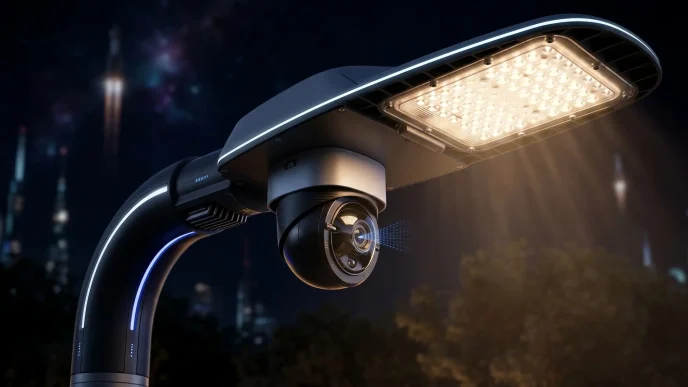
Smart city systems rely on constant data flow. Traffic management, surveillance, utilities, and emergency response all depend on real-time communication.
With only 14% coverage, these systems cannot operate consistently nationwide.
However, at 30%, coverage becomes wide enough to support interconnected systems across cities.
As a result, smart infrastructure becomes practical rather than experimental.
Telemedicine and Agriculture Still Waiting
Advanced use cases like telemedicine and precision agriculture require stable, low-latency networks.
For example, remote diagnosis depends on uninterrupted video and data transfer. Similarly, smart farming tools rely on real-time sensor feedback.
However, limited 5G coverage restricts these innovations to pilot projects.
Therefore, scaling remains the biggest barrier.
Infrastructure, Not Just Technology
The challenge is not only technological. It is infrastructural.
Network expansion requires fiber backhaul, power stability, and investment in rural coverage.
Without these foundations, 5G remains confined to urban zones.
Consequently, adoption speed depends as much on infrastructure as on spectrum availability.
What Happens After 30%?
If Nigeria reaches 30% penetration, several shifts may occur:
- Faster rollout of smart city systems
- Expansion of industrial IoT applications
- Broader access to high-speed digital services
- Increased foreign investment in telecom infrastructure
In addition, digital innovation could accelerate across multiple sectors.
Conclusion:
At 14%, Nigeria’s 5G network delivers speed, but only in isolated pockets.
However, the real transformation begins at scale. The 30% threshold represents the shift from disconnected “islands of speed” to a fully connected digital ecosystem.
Ultimately, the future of smart cities, telemedicine, and precision agriculture depends not just on launching 5G, but on expanding it everywhere.