



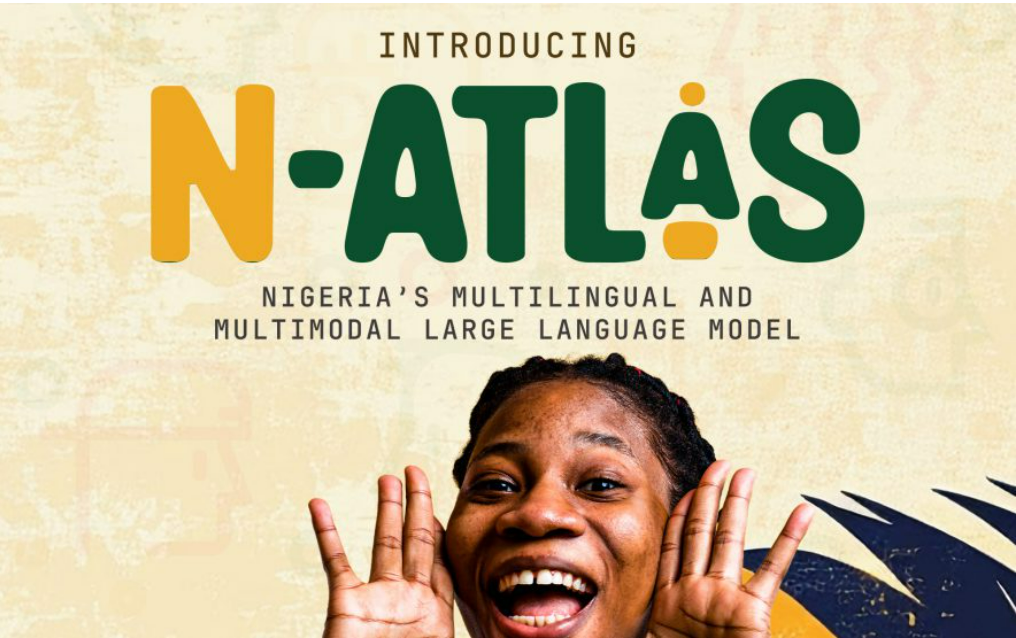
Nigeria has begun scaling the deployment of N-ATLAS across public sector helpdesks, marking a major step in the country’s push toward sovereign artificial intelligence.
Government agencies now use the system to handle citizen inquiries, automate responses, and improve service delivery. Officials say the model performs better in local contexts because it understands Nigerian-accented English and regional dialects.
This shift reflects a broader strategy to build AI systems that operate within national boundaries. The concept, often called “sovereign AI,” focuses on local data control, cultural accuracy, and reduced reliance on foreign platforms. 
Nigeria’s diverse language landscape makes this approach critical. Millions of citizens communicate in Pidgin, Yoruba, Hausa, Igbo, and mixed English variants. Traditional AI systems often struggle with these nuances, leading to poor user experience and miscommunication.
N-ATLAS aims to close that gap. By training on local datasets, the model can interpret tone, slang, and context more accurately. This improves response quality in customer service and public communication.
The impact extends beyond government use. B2B startups in Nigeria now see multilingual AI as a competitive advantage. Companies that build tools on locally trained models can offer better customer engagement, especially in fintech, telecom, and e-commerce.
Startups also benefit from lower friction. Users interact more naturally with systems that reflect their speech patterns. Consequently, This reduces onboarding challenges and increases trust in digital platforms.
Additionally, Sovereign AI also addresses data security concerns. Hosting and training models locally allows organizations to comply with national regulations and protect sensitive information. Therefore, it has become a key factor for enterprises and government institutions.
However, challenges remain. Building and maintaining large language models requires significant infrastructure, funding, and technical expertise. There are also concerns about bias in local datasets and the need for continuous updates.
Despite these hurdles, momentum continues to grow. Nigeria’s investment in N-ATLAS signals a shift toward localized AI development.
As deployment expands, multilingual LLMs could redefine how businesses and governments interact with users. In a market as linguistically diverse as Nigeria, the ability to understand people as they speak may prove to be the most valuable advantage of all