


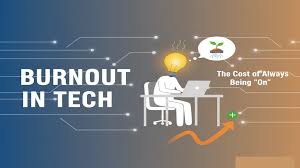
The 2026 tech recovery has created a paradox. Companies are hiring again, yet teams remain lean. As a result, employees now handle heavier workloads with fewer resources. This shift is driving a rise in what many call “always-on” burnout.
Across global tech newsrooms and startup ecosystems, the pattern is clear. The post-layoff era has not reduced pressure. Instead, it has concentrated it.
Lean Teams, Heavy Expectations
After the 2025 global tech layoffs, many companies rebuilt with smaller teams. However, they kept the same growth targets. In some cases, expectations increased.
Consequently, engineers, product managers, and operations staff now handle multiple roles. One person often covers work that previously required three.
Furthermore, digital tools blur working hours. Slack messages, emails, and deployment alerts continue late into the night. Therefore, work no longer has a clear endpoint.
The Rise of “Always-On” Culture
Always-on culture means employees stay mentally connected to work even outside office hours. They may not be actively working, but they remain alert to notifications and deadlines. 
In addition, global teams increase the pressure. A task delayed in Lagos may need attention for colleagues in Europe or the US. As a result, work cycles extend across time zones.
Over time, this constant availability leads to mental fatigue. Workers struggle to disconnect, even during rest periods.
The Hidden Productivity Trap
At first, lean teams appear efficient. Companies reduce costs and speed up decision-making. However, this efficiency comes with hidden risks.
Burnout reduces creativity and focus. In addition, it increases errors and slows long-term output. Therefore, productivity eventually declines even if short-term performance rises.
Moreover, experienced engineers become the most affected group. They carry critical system knowledge and often absorb extra workload. As a result, they face the highest risk of exhaustion.
What Founders Often Miss
Many founders focus on output metrics. They track deployments, revenue growth, and customer acquisition. However, they often ignore emotional capacity within teams.
Furthermore, constant urgency becomes the default culture. Every task feels critical. Over time, this removes balance from the work environment.
Consequently, teams stop recovering between work cycles. Instead, they operate in continuous pressure mode.
The Cost of Losing Senior Talent
Burnout does not always lead to immediate resignation. Instead, it leads to disengagement first. Employees reduce initiative and avoid extra responsibility.
Eventually, some leave entirely. Replacing senior engineers costs time and knowledge. Therefore, companies lose both productivity and institutional memory.
In addition, recruitment pipelines remain tight in specialized roles. This makes recovery even harder.
Building Sustainable High Performance
Founders can reduce burnout without reducing output. First, they must set clear boundaries for response times. Not every message requires immediate action.
Second, they should design workload rotation systems. This ensures no single employee carries continuous high-pressure tasks.
Third, companies must invest in mental recovery time. Scheduled downtime improves long-term performance.
Finally, leaders must model healthy behavior. Teams follow what founders practice, not what they say.
A Leadership Problem, Not a Worker Problem
Burnout in 2026 is not an individual failure. It is a structural issue created by post-layoff efficiency models.
Therefore, solving it requires leadership-level decisions. Companies that ignore it risk losing their strongest talent.
Conclusion: Recovery Must Include People, Not Just Revenue
The tech industry has entered a recovery phase. However, recovery cannot focus only on growth metrics.
Ultimately, sustainable performance depends on sustainable people. If companies fail to balance workload and well-being, the “always-on” culture will undermine the very growth it tries to protect.