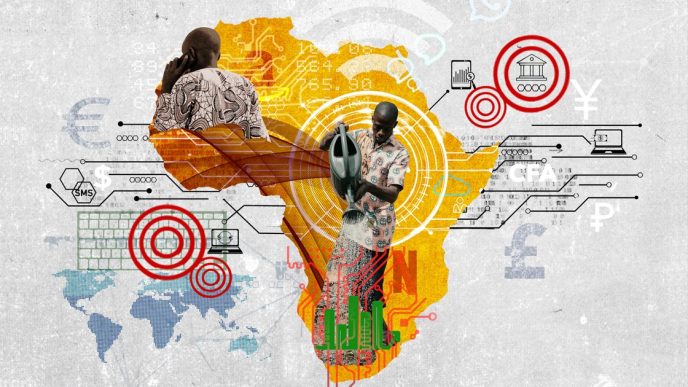





Nigeria’s digital asset sector has transformed into a global outlier, recording a staggering $59 billion in on-chain value over the past year. Unlike Western markets driven by institutional whales, Nigeria’s growth is fueled by a grassroots “Retail Revolution,” with 85% of all transactions valued under $1 million. This surge underscores a fundamental shift where everyday Nigerians—from market vendors to freelance developers—are bypassing traditional banking hurdles to utilize stablecoins and Bitcoin for micro-payments, cross-border trade, and as a vital hedge against persistent currency volatility.
Survival Over Speculation
While global headlines often focus on crypto “mooning,” the Nigerian context is rooted in economic utility. With the Naira facing historic inflationary pressures, crypto has transitioned from a speculative investment to a functional alternative for the middle class. The delisting from the FATF grey list in 2025 further legitimized the space, allowing local P2P markets to flourish as the primary engine for domestic liquidity.
The Micro-Transaction Engine
The $59 billion volume reveals a highly fragmented but hyper-active market: 
- The Stablecoin Pivot: USDT (Tether) has become the de facto digital dollar for small-scale importers paying suppliers in China and Dubai.
- P2P Dominance: Despite past regulatory friction, peer-to-peer (P2P) platforms remain the lifeblood of the retail sector, processing millions of sub-$500 transfers monthly.
- Remittance 2.0: Diaspora flows are increasingly moving through on-chain rails to avoid the high fees and slow settlement times of traditional money transfer operators (MTOs).
Why It Matters
The retail surge represents a paradigm shift in how Nigerians interact with global finance:
- Inflation Hedging: Crypto provides a “Digital Safe Haven” for retail savings that traditional banks currently cannot match in terms of accessibility.
- Economic Resilience: Small-scale cross-border trade—the backbone of Nigeria’s informal sector—is now untethered from FX scarcity.
- Global Integration: Micro-transactions allow Nigerian freelancers to receive international payments instantly, integrating them into the global remote work force.
The Bottom-Up Revolution
The $59 billion retail surge proves that Nigeria’s crypto market is built from the bottom up, not the top down. While institutional players remain cautious, the “Retail Revolution” has already established an alternative financial architecture.
Explore more stories on startups, funding, and innovation across Africa in our Startups & Funding section.