




A groundbreaking 2026 forecast by asset management firm Arthur Stevens has positioned Nigeria as Africa’s premier tech titan, with digital revenues projected to hit $18.3 billion by December. This bullish outlook suggests a near-doubling of the sector’s contribution to the GDP within a single calendar year. While the current “Big Five” unicorns have laid the groundwork, the focus has shifted to the “Unicorn Pipeline”—a group of high-growth “Soonicorns” in the Agriculture and Energy sectors that are essential to bridging the gap and hitting this multi-billion dollar valuation target.
Beyond the Fintech Bubble
For years, Nigeria’s tech narrative was synonymous with payment processing. However, the roadmap to $18.3 billion requires diversification. As of May 2026, venture capital is aggressively pivoting toward “Real-Economy Tech.” Investors are no longer looking for the next digital wallet; they are hunting for platforms that solve structural deficits in food security and power distribution, where the addressable market remains massive and largely untapped.
The Rising “Soonicorns”
The “Unicorn Pipeline” is currently dominated by two distinct verticals: 
- Agriscience Giants: Startups like ThriveAgric and Hello Tractor are evolving into full-stack ecosystem orchestrators, integrating fintech with supply chain logistics to capture value at every stage of the farm-to-table process.
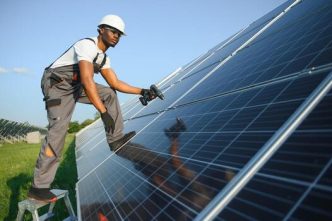
- Renewable Energy Pioneers: With the national grid remaining volatile, solar-as-a-service firms like Daystar Power and Lumos are being re-rated by analysts as infrastructure plays, moving them closer to the $1 billion valuation mark.
- The Revenue Multiplier: Unlike pure software plays, these sectors generate high-velocity revenue tied to physical assets, providing the “hard numbers” needed to support the $18.3B projection.
Why It Matters
The $18.3 billion milestone represents more than just tech prestige:
- FDI Magnet: Hitting this revenue target will signal to global institutional investors that the Nigerian market has matured beyond speculative early-stage bets.
- Job Creation: Unlike fintech, the Agriculture and Energy tech sectors are labor-intensive, promising to absorb thousands of youth into the formal digital economy.
- Currency Stability: A dominant tech export market provides a much-needed buffer for foreign exchange reserves, helping to stabilize the Naira.
Cultivating the Next Billion
Nigeria’s path to $18.3 billion is no longer a theoretical exercise. By widening the “Unicorn Pipeline” to include the pillars of Agriculture and Energy, the tech ecosystem is finally aligning with the nation’s core needs.
Explore more stories on startups, funding, and innovation across Africa in our Startups & Funding section.