



Nigeria’s payments system just posted another record. According to data from the Nigeria Inter-Bank Settlement System, Point-of-Sale (PoS) transactions surged by 79% in Q1 2026, hitting nearly ₦18.78 trillion.
On the surface, this looks like digital progress. But beneath the numbers lies a contradiction: Nigeria’s “digital economy” is still deeply dependent on physical cash agents and PoS terminals.
The Rise of a “Phygital” Economy 
Nigeria is not fully cashless or fully digital. Instead, it operates in a hybrid space, described as “phygital,” a mix of physical and digital systems.
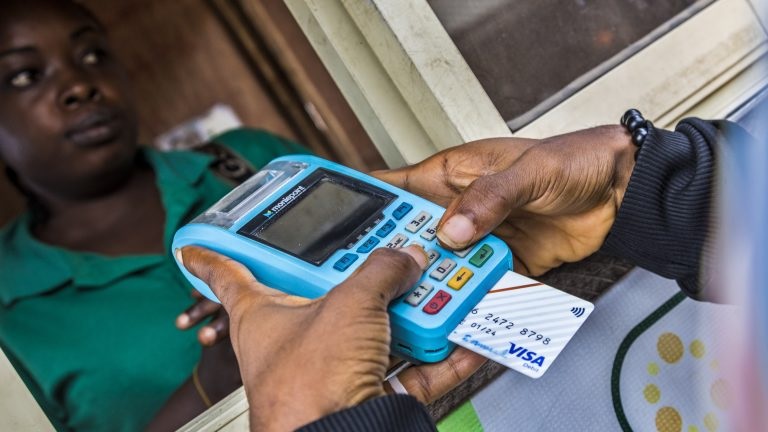
PoS terminals now sit at the center of this model. They bridge bank accounts, mobile wallets, and physical cash withdrawals.
As a result, digital payments often end in physical cash exchanges.
Therefore, the system is digital in initiation, but physical in completion.
Why PoS Is Still Dominating
Despite mobile banking growth, PoS agents remain essential.
Several factors explain this:
- Limited trust in fully digital transactions
- Cash dependency in daily commerce
- Network and infrastructure gaps
- Low digital literacy in some regions
In addition, PoS agents provide services beyond payments, including withdrawals, deposits, and informal credit support.
Therefore, they function as financial access points, not just payment tools.
From Payments to Agent-Led Finance
The role of PoS agents is expanding. They are no longer just transaction processors.
Instead, they now act as informal financial service hubs.
In many communities, agents help users:
- Withdraw and deposit cash
- Pay bills and utilities
- Transfer funds across banks
- Access small-scale credit services
As a result, the financial system is becoming agent-driven rather than platform-driven.
The Digital Economy Paradox
The rapid growth of PoS transactions highlights a key contradiction.
On one hand, Nigeria is building a digital economy with fintech apps and mobile wallets.
On the other hand, most transactions still rely on physical interaction.
Therefore, digital finance is expanding, but not replacing cash-based systems.
This creates a structural imbalance in the economy.
Why Full Digital Adoption Is Still Limited
Several barriers slow down full digital adoption:
- Infrastructure gaps in rural areas
- Power supply challenges
- Security concerns around online fraud
- Preference for instant cash settlement
In addition, many users still prefer human intermediaries over fully automated systems.
Therefore, trust remains a major factor in adoption.
The Agent Network Advantage
PoS agents succeed because they solve real-world problems.
They are physically present, accessible, and flexible. In many areas, they are more reliable than banking apps.
As a result, agent networks have become a backbone of financial inclusion.
In addition, they reduce the distance between formal banking systems and informal economies.
What This Means for Fintechs
Fintech companies are now rethinking their models.
Instead of focusing only on apps, they are investing in hybrid systems that combine digital platforms with agent networks.
Therefore, the future of payments is not purely digital—it is distributed.
In addition, competition will increasingly focus on service depth rather than just transaction speed.
Conclusion:
The ₦18.78 trillion PoS milestone shows that Nigeria’s financial system is evolving, but not in a straight line.
Instead, it is blending physical and digital infrastructure into a single ecosystem.
Ultimately, the future is not cashless versus digital. It is “phygital” where agents, terminals, and apps all work together to move money across the economy.