


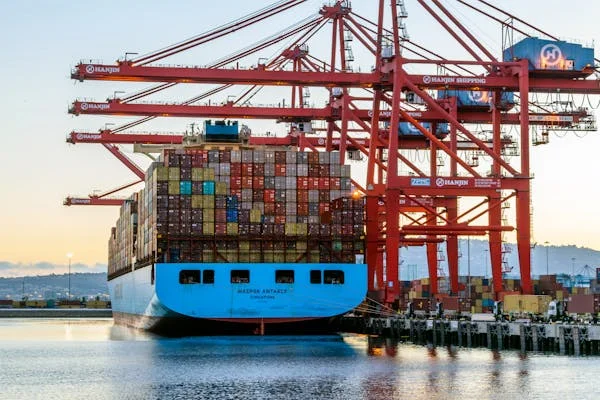
A new tech-enabled logistics hub in Lagos is making bold claims: reducing port clearance time from 21 days to just 6. The system reportedly uses automated scanning and blockchain-based tracking to streamline cargo movement.
As a result, this raises a bigger question for Nigeria’s digital economy: are port delays now a problem of systems or structure?
How the New Logistics Model Works 
The emerging hub model integrates several technologies:
- Automated cargo scanning for faster inspection
- Blockchain tracking for transparent documentation
- Digital dashboards for real-time clearance updates
In theory, this reduces human bottlenecks and paperwork delays that typically slow down operations at Nigerian ports.
Why Nigerian Ports Are Historically Slow
In addition, port inefficiency has long been a challenge. Delays are often caused by:
- Manual documentation processes
- Fragmented agency coordination
- Congestion at terminals
- Lack of real-time data sharing
However, these issues have created an environment where clearance can take weeks instead of days.
Can Technology Solve Structural Problems?
While automation improves speed, it cannot fully eliminate deeper challenges. This leads to a key debate: is the bottleneck now code or corruption?
What Code Can Fix
Technology can reduce inefficiency by:
- Automating paperwork
- Tracking shipments transparently
- Reducing human error
- Improving coordination between agencies
What Code Cannot Fix
However, software struggles with:
- Informal payments and leakages
- Institutional resistance to change
- Physical congestion at ports
- Policy inconsistencies
The Reality: Hybrid Bottlenecks
The truth is that port delays are not purely technical, they are systemic. Even the best digital system must operate within physical and administrative constraints.
This means logistics hubs can optimize processes, but they cannot fully override governance issues.
Impact on Nigeria’s Digital Economy
If successful, logistics hubs could still transform trade efficiency by:
- Reducing cargo dwell time
- Reducing cargo dwell time
- Lowering import costs
- Improving supply chain predictability
- Attracting foreign trade confidence
For businesses, even partial improvement can create significant economic value.
Conclusion
As a result, the claim of reducing clearance time from 21 days to 6 is ambitious but not impossible. Technology is clearly a powerful tool in modernizing Nigeria’s ports.
However, the real question is not whether software works. It is whether the system around it is ready to let it work fully.
Ultimately, In Nigeria’s logistics future, success will depend on more than code it will depend on coordination, trust, and institutional reform.