


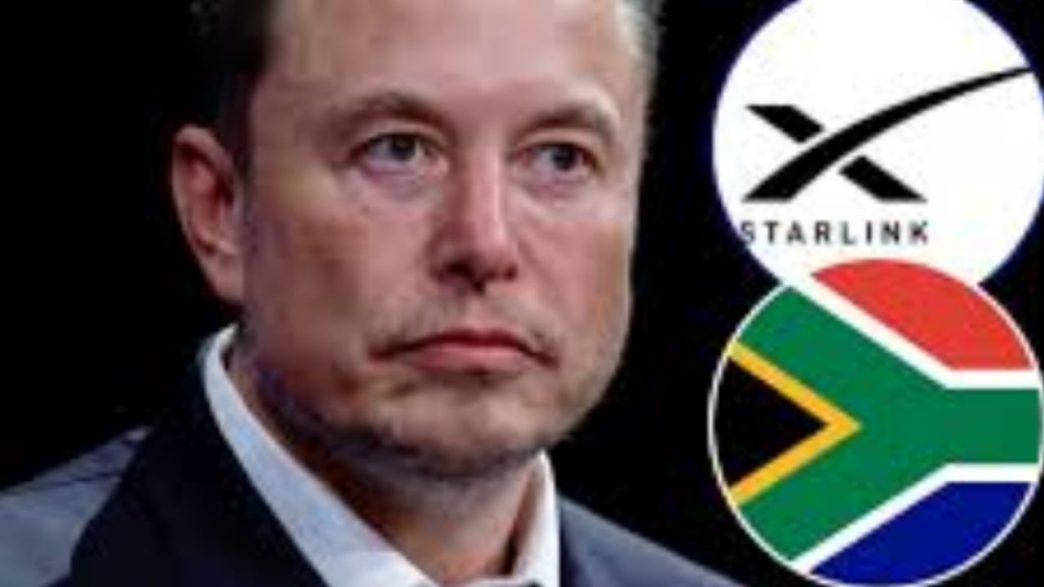
Elon Musk has accused South African regulators of blocking Starlink’s operating license due to racial policies, calling the rules discriminatory against him as a white South African-born entrepreneur.
He claims the country’s ownership requirements unfairly restrict foreign tech companies unless they include Black local shareholders.
South African authorities deny the allegation, saying Starlink has not completed the required licensing process and that the rules apply equally to all telecom operators.
At the center of the dispute is South Africa’s B-BBEE policy, which promotes local ownership by historically disadvantaged groups to address inequality from apartheid.
No Formal Starlink License Application
Regulators say Starlink has not submitted a completed license application under current requirements. This weakens the “blocked due to race” claim, as authorities describe it as a compliance issue, not rejection.
Global Context and Expansion Pressure
Starlink continues expanding across Africa and other developing regions.
However, South Africa remains one of the few major markets where it has not launched. Neighbouring countries like Mozambique, Zambia, and Botswana already use the service, increasing pressure on South Africa to clarify its satellite licensing position. 
Conclusion
The Starlink–South Africa dispute reflects tension between global tech expansion and national transformation policies.
Musk frames it as discrimination, while South African authorities call it regulatory compliance and economic reform.
Ongoing negotiations may shape how global tech firms handle local ownership laws in emerging markets.